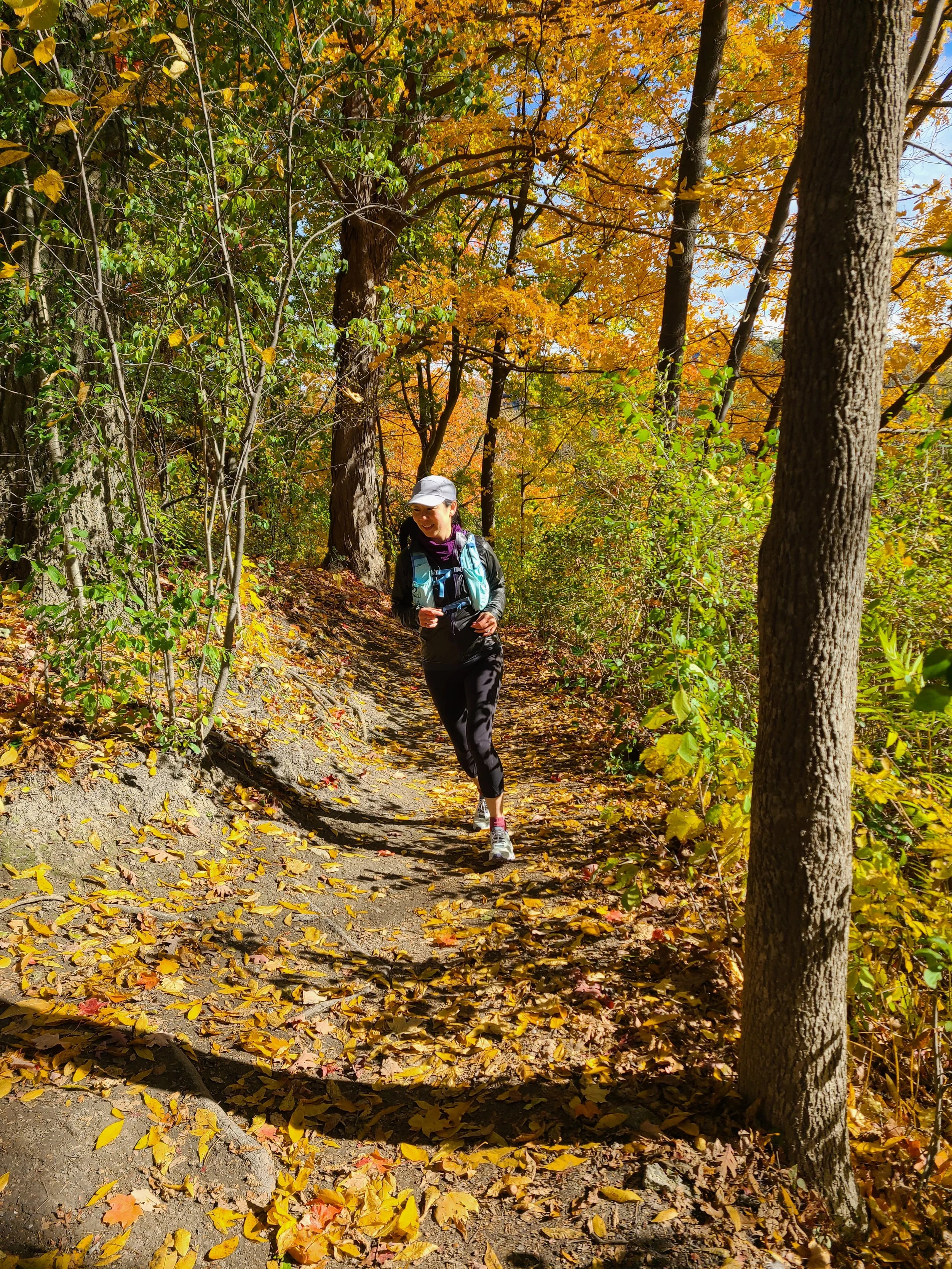
inclusivity
Why Inclusion Matters
Who makes up the majority on a start line and who is not represented? How many races offer categories for nonbinary and gender diverse runners? Do brands and ads tend to showcase certain bodies over others? Is running a 5km distance as glorified as running an ultra distance race? Does everyone enjoy the same comfort and safety level when out running? Can every runner afford race registration and travel to races?
We love running, especially trail running, but we know that it is not fully inclusive of all runners. While things are improving, they are still not fully inclusive. The Trail Collective aims to make trail running more accessible by centering the experience of runners who experience greater barriers to the sport of trail running.
We believe that creating and maintaining an inclusive space is a shared responsibility. We invite you to review this material and join us in this endeavour!
When people show up, we want them to feel not only that they are included but that they truly belong.
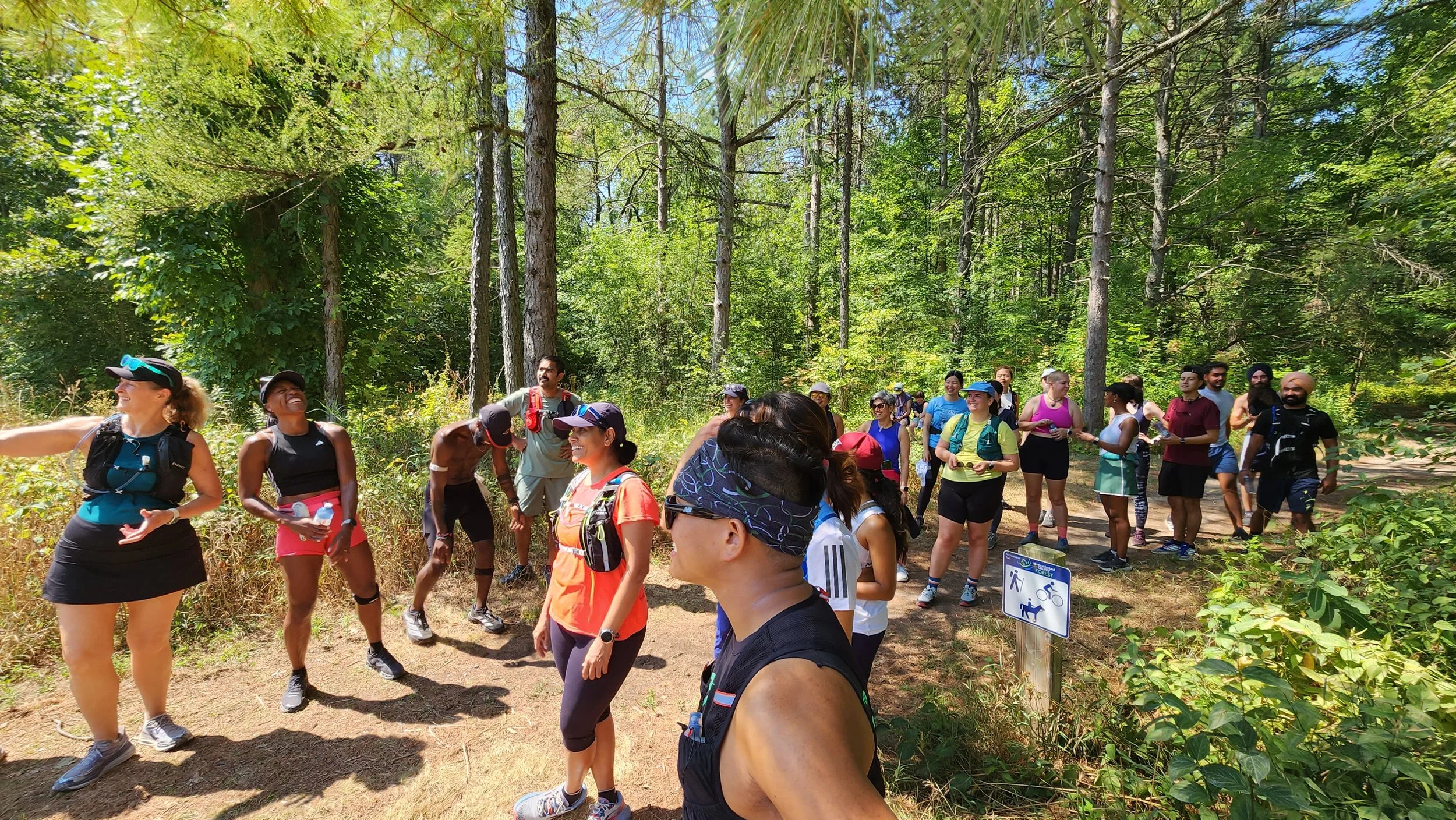
Anti-harassment statement
The Trail Collective is a diverse and inclusive group with zero tolerance for harassment and discrimination. This includes sexual harassment, discrimination or bias based on gender identity and expression, sexual orientation, marital status, race, religion, creed, nationality, or any other protected status. Any form of harassment will not be tolerated, and anyone involved in any inappropriate behaviour will be asked not to attend future events.
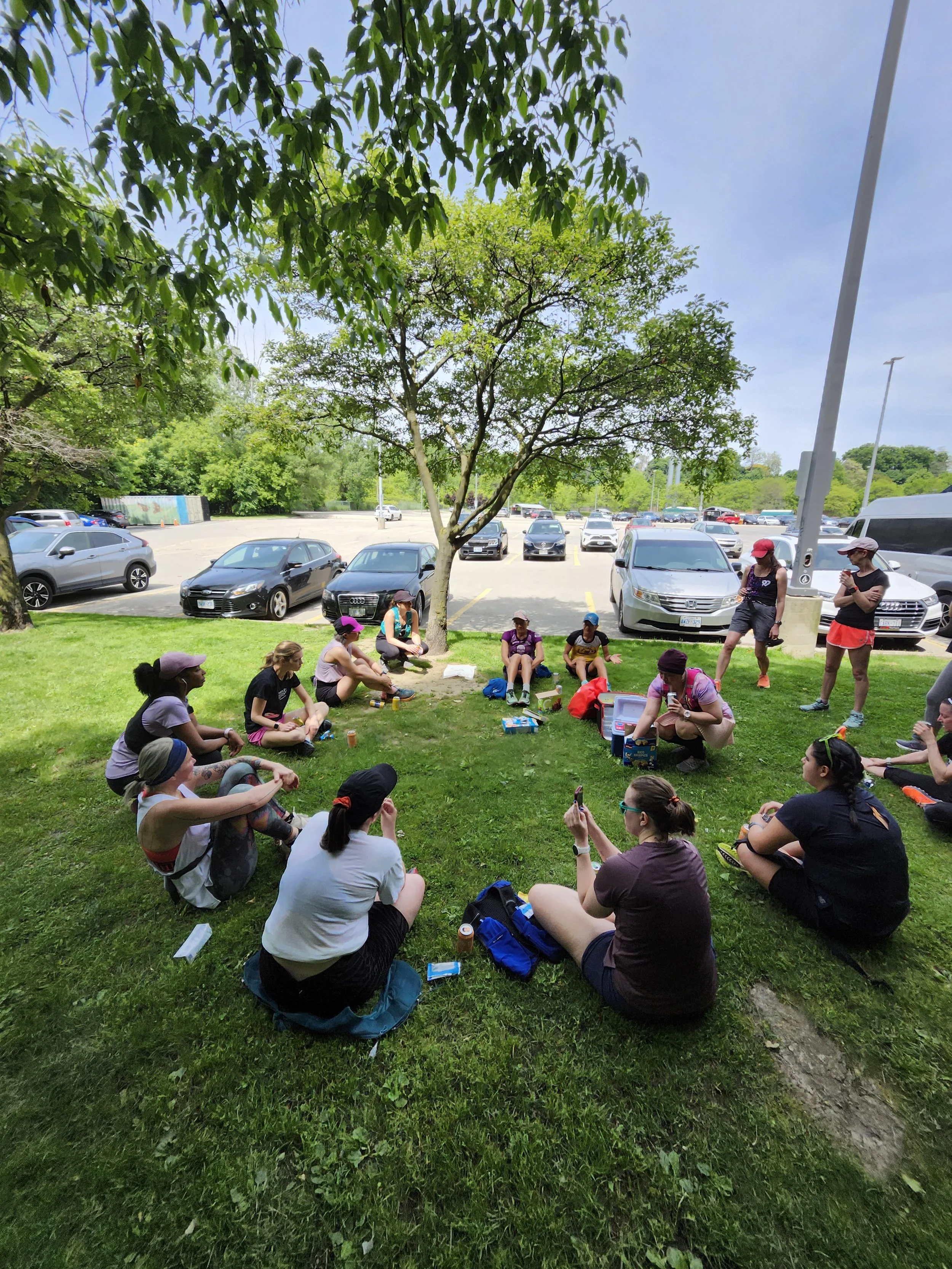
Respect for the trails
and other trail users
Let’s leave the trails as we find them (or better)! Take out what you take in. Please don’t litter. The trails are for everyone, so be mindful of cyclists, hikers, dog-walkers, and other runners using the trails. Read the information at trailheads for trail etiquette, trail direction indicators (signs, blazes), and rules of right of way.
Land Acknowledgment
The Trail Collective respectfully acknowledges that we hold the majority of our events on the Treaty Lands and Territory of the Mississaugas of the Credit First Nation and the Traditional Territory of the Anishinaabe, Haudenosaunee, and the Huron Wendat. Where we expand beyond Toronto, we strive to educate ourselves and our participants about the treaty and territory land we visit and amend our event land acknowledgements accordingly.
A land acknowledgement is a small, but impactful act of truth and reconciliation. In doing so we truthfully acknowledge the historic systemic harm experienced by Indigenous peoples and their ancestors that have removed them from their language, culture, and lands. As well, we acknowledge that Indigenous peoples continue to experience systemic racism and harm today which highlights the importance of taking meaningful steps towards truth and reconciliation. In accessing Indigenous land, we acknowledge that we benefit from the harms of colonization.
The Trail Collective invites you to reflect on the word reconciliation. It is a verb; it is an ongoing action. In the spirit of actionable reconciliation, we ask that you consider this quote from the Chiefs of Ontario (Ontario representative to the Assembly of First Nations):
The Chiefs of Ontario distinguish these lands from those that were parcelled up as reservations, whose borders were imposed by the Canadian government. Indigenous peoples possess inherent and Treaty rights to utilize their traditional territories today.
Treaties were made to establish how Nations would co-exist and granted rights and permission to the settlers. Treaties are agreements made between Indigenous Nations and also with the Crown. They were negotiated on the basis of mutual respect and the principles of Peace and Friendship and determine how lands and resources are to be shared. At the Trail Collective we strive to remain accountable to these treaties as well as the Two Row Wampum and Dish with One Spoon covenants.
We highlight this aspect of Indigenous land connection, preservation, and stewardship as it is something that we as trail runners can connect with on a meaningful level. We spend a lot of time in the woods across this province and country and benefit greatly from the connection we experience with nature on Indigenous land.
In the spirit of allyship, the Trail Collective aims to continue our ongoing education and efforts to embed truth and reconciliation in our initiatives to improve inclusion in trail running.